
2026-09-04 · Jason Clearwater
How Local Pollen and Dust Affect Fort Worth Air Filter Replacement Schedules
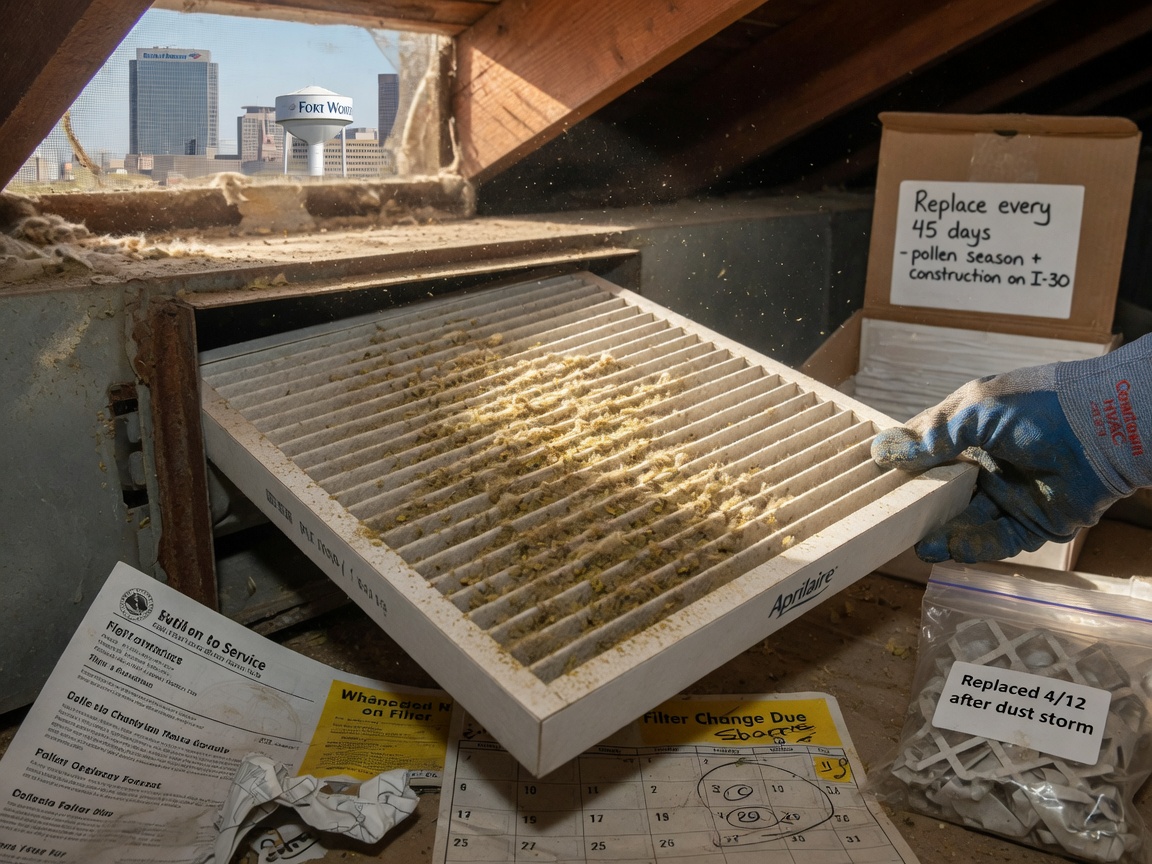
Fort Worth homeowners need to replace standard 1-inch air filters every 30-45 days from March through May and every 45-60 days from June through September because of heavy oak, cedar, and ragweed pollen combined with wind-blown dust from construction sites and open fields in Tarrant County.
Spring Pollen Loads in Tarrant County
Oak and cedar release pollen from late February into April, coating surfaces across Downtown, the Cultural District, and Arlington Heights. Humid subtropical mornings keep particles suspended longer before afternoon winds carry them into return vents. Homes built before 1980 in these neighborhoods often have looser duct joints that pull in extra outdoor air, shortening filter life by two weeks compared with newer builds near TCU Stadium. Residents notice reduced airflow and higher indoor humidity when filters clog early. Checking the filter on the first day of each month during this window prevents the blower motor from working harder against restricted airflow. Nearby cities such as Keller and Mansfield share the same pollen calendar, so schedules stay consistent across the metro.
Summer Dust Patterns Near Local Landmarks
Hot, dry stretches from June to September stir fine soil and construction dust around the Stockyards and Sundance Square. Afternoon winds funnel particles through open windows and into HVAC intakes, especially in single-story homes with slab foundations common in Southwest Fort Worth. The Kimbell Art Museum area sees added foot traffic dust tracked indoors. These conditions load filters faster than mild winter months when pollen counts drop. A 2-inch pleated filter in a 1990s Arlington Heights house typically reaches capacity in 50 days under these loads, while a basic fiberglass filter may need swapping in 35 days. Monitoring static pressure at the return helps technicians spot when dust has cut efficiency before cooling performance drops.
Adjusting Schedules for Local Housing Stock
Older homes near the Stockyards often retain original ductwork with larger gaps that admit more outdoor particles than sealed systems in newer Mansfield subdivisions. Mild winters allow year-round operation, so filters accumulate dust continuously rather than sitting idle. Homeowners in Northside and East Fort Worth report visible gray buildup on filters within four weeks during construction booms. Replacing filters on a calendar tied to local weather patterns rather than a fixed 90-day rule keeps systems running at design airflow. Checking the filter after any high-wind event or nearby roadwork provides an extra safeguard against early clogging.
Practical Monitoring Steps for Fort Worth Homes
Mark the filter housing with the installation date and inspect every 30 days during peak seasons. Hold the used filter to bright light; if light is blocked in more than half the surface, replace it immediately. Keep spare filters on hand sized to the exact furnace or air handler model. Pair this routine with professional AC Service visits that include duct inspections in older Tarrant County homes. When rapid temperature swings strain cooling, see how restricted filters contribute in the related post Why Fort Worth AC Units Freeze During Summer Heat Waves. Consistent attention to these local conditions prevents unnecessary wear on equipment serving Downtown and surrounding neighborhoods.