
2026-09-04 · Jason Clearwater
Adjusting Your Thermostat Settings for Fort Worth's Rapid Temperature Swings
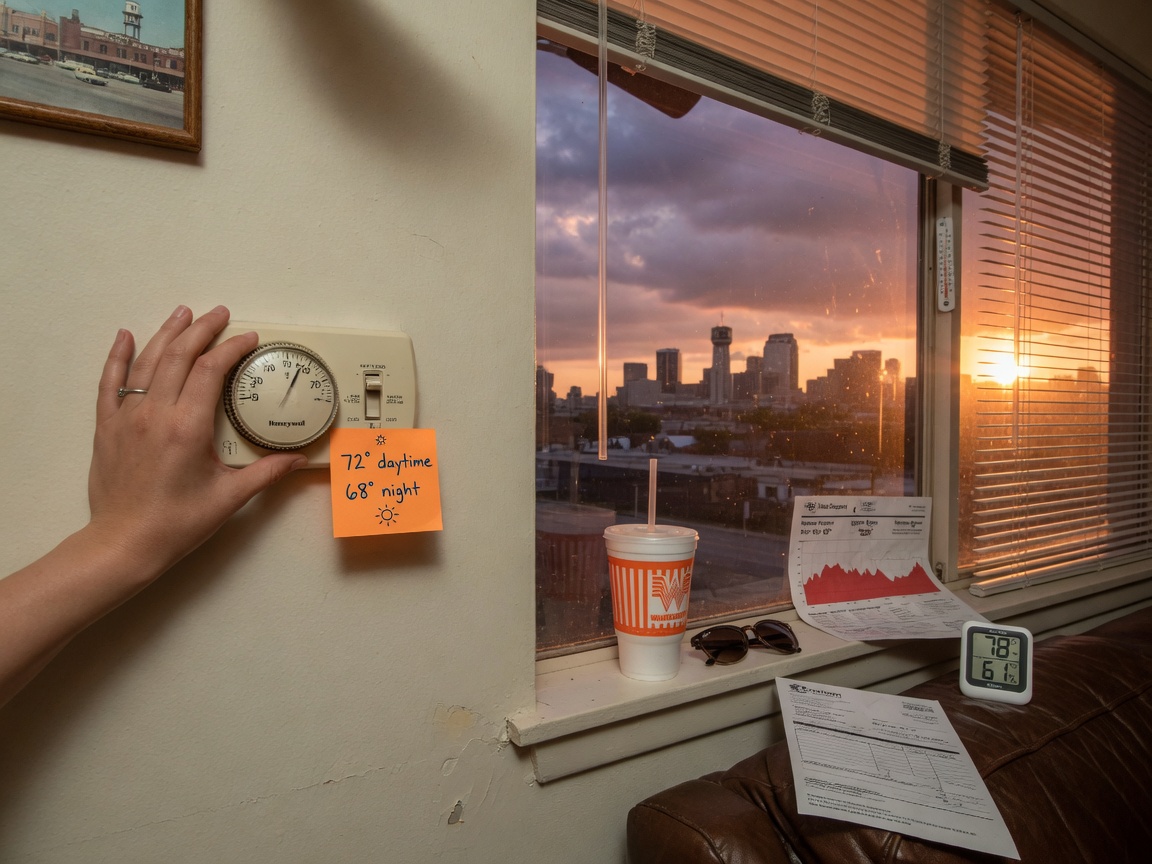
In Fort Worth's humid subtropical climate with hot summers and mild winters, set daytime cooling to 74–76°F and nighttime heating to 68–70°F during swings to balance comfort across Tarrant County neighborhoods while avoiding short cycling.
Reading Local Weather Patterns in Tarrant County
Fort Worth sits in a region where afternoon highs near the Stockyards can reach the mid-90s while evening drops hit the 60s, especially around the Cultural District near the Kimbell Art Museum. These shifts hit older brick homes in Arlington Heights harder because thick walls retain daytime heat longer than newer builds near TCU Stadium. Residents in Downtown Fort Worth often notice faster changes due to urban heat islands from Sundance Square concrete. Checking hourly forecasts from local stations helps anticipate when to raise the cooling setpoint by 2°F before a front arrives from the west. The same pattern repeats in nearby Arlington and Mansfield, where open terrain lets winds accelerate the drop after sunset.
Day and Night Setpoints for Summer Swings
During peak summer heat waves, hold the thermostat at 74°F from 10 a.m. to 8 p.m. in homes around the Stockyards to limit humidity buildup inside. Once temperatures fall after dark, raise the setpoint to 78°F so the system rests and indoor air stays drier. In the TCU neighborhood, where many two-story houses trap heat upstairs, program a 2°F offset between floors if the unit supports it. This approach reduces runtime by roughly 15–20 percent compared with constant 72°F settings. When a sudden storm rolls through Mansfield or Keller, bump the setpoint another degree to prevent the coil from freezing during the brief humidity spike.
Winter Adjustments Around Mild Cold Fronts
Mild winters still bring 20–30°F drops overnight in West Fort Worth. Set the system to 68°F after 10 p.m. and let it rise to 70°F by morning so pipes in older Arlington Heights homes stay protected without constant operation. Near the Cultural District, where many 1940s–1960s houses have single-pane windows, avoid dropping below 66°F at night because the extra load on the heat exchanger increases wear. If a front stalls over Downtown Fort Worth, hold the daytime setting at 70°F instead of letting the system chase the outdoor swing. These small changes keep supply temperatures steady and cut morning recovery time.
Programming Tips for Stockyards and Northside Homes
Homes near the Fort Worth Stockyards often sit on slab foundations that hold ground temperature longer, so program a gradual 1°F change every two hours rather than abrupt jumps. In Northside neighborhoods, where pollen counts spike with wind shifts, pair the schedule with clean filters to maintain airflow during rapid humidity changes. Use the hold feature only when a front is forecast within four hours; otherwise let the schedule run to avoid overriding energy-saving setbacks. For multi-level houses in Southwest Fort Worth, set the main floor 2°F cooler than upstairs during summer afternoons to balance the natural stack effect.
For deeper guidance on keeping systems responsive during these swings, review AC Service details and the related post on Why Fort Worth AC Units Freeze During Summer Heat Waves. Additional filter insights appear in How Local Pollen and Dust Affect Fort Worth Air Filter Replacement Schedules.